


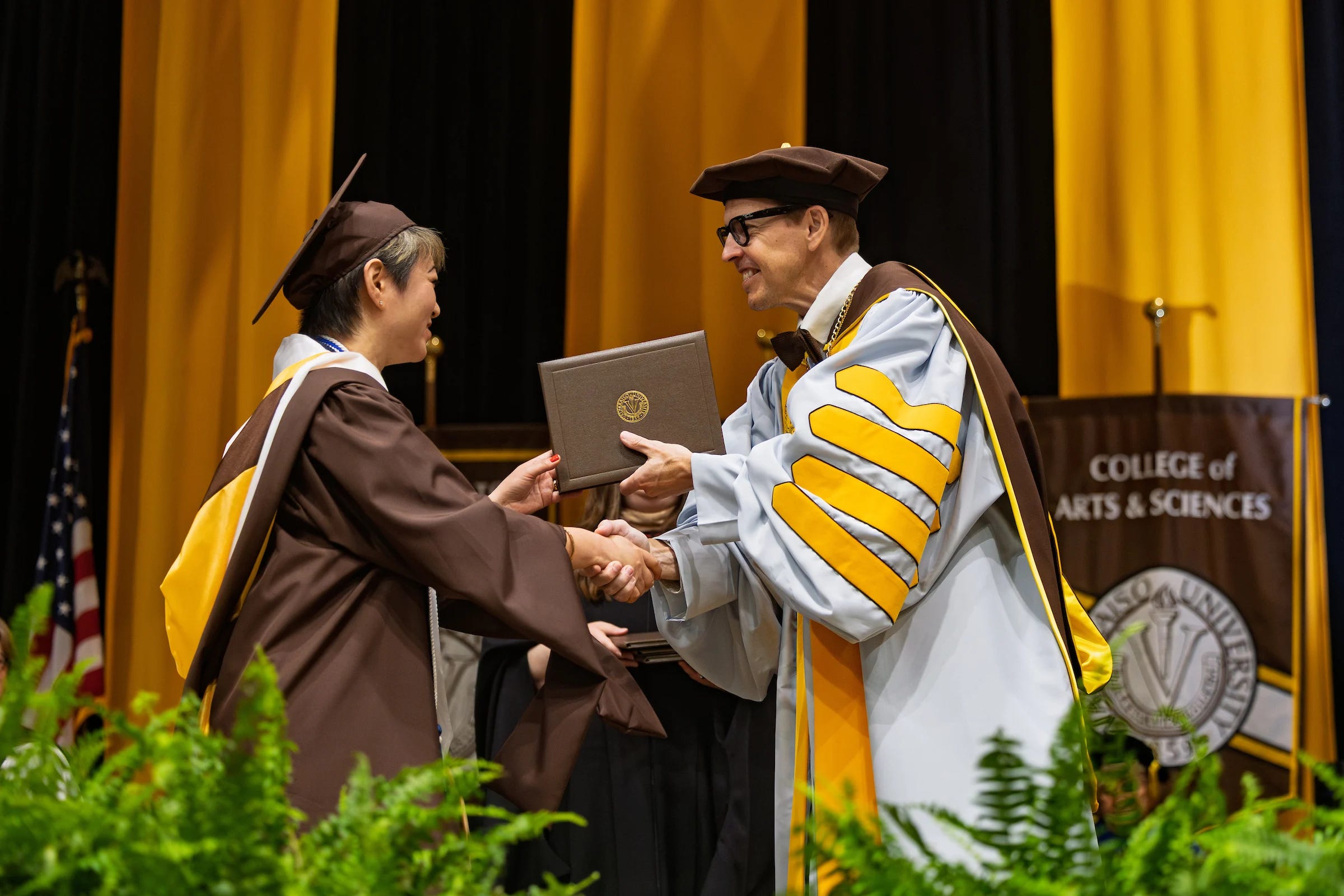
Universities have spent decades expanding what they promise students. It is time to ask what they promise society in return—and whether they are producing the citizens a free society needs over the decades that follow.
The University’s Promise Over Time
We spend a great deal of time arguing about what universities owe their students: tuition, student debt, curriculum, campus safety, free speech, diversity, career preparation and whether a degree is still worth the price. Those are legitimate questions, but they are viewed almost entirely through the four-year window in which a student attends college.
I think we are looking at the wrong clock. Universities are among our most durable institutions. Many have existed for generations, accumulate enormous financial and cultural influence, benefit from tax-exempt status and public support, and send graduates into society for fifty or sixty years after they leave campus. The better question is not simply what universities owe students. It is what universities, and the graduates they produce, owe society over time.
Historically, higher education was never conceived solely as a factory for credentials. Education also carried a civic dimension. The educated person was expected to participate in society and assume responsibilities beyond personal advancement. We now spend far more time discussing what students are entitled to receive than what higher education should obligate them to give back.
From Identity to Common Responsibility
This is where I believe some of higher education has gone off course. Universities have devoted enormous energy to diversity, equity and inclusion programs intended to address historical and systemic inequities. Whatever their intentions, continually organizing students around identity can also reinforce the distinctions universities should be helping them bridge. If every conversation begins with what separates us, it becomes harder to build the habits required to live together.
Universities should expose students to people and ideas unlike their own, but the objective should be learning how to function constructively despite those differences—with common citizenship, shared responsibility, critical thinking and the courage not to blindly follow the crowd.
Civics belongs at the center of that mission. Students should understand how democratic institutions work, what rights they protect and what responsibilities those rights impose. They should learn how to argue without treating disagreement as moral contamination. Citizenship is not a spectator sport.
Privileges Should Carry Obligations
Universities also need to be candid about their side of the bargain. American higher education receives substantial public benefits, including tax exemptions and government support through research funding, grants and student aid. Society has treated education as a collective investment in our future.
A university education may last four years. Its civic consequences can last fifty. Society has every right to ask what it receives in return.
That investment should come with an expectation of public return. I am not suggesting government dictate what universities teach. I am suggesting something simpler: if higher education claims a privileged place in society, it should accept an obligation to strengthen it. And don’t give me the esoteric argument that imparting knowledge is enough. I want measurable actions and results.
I would make meaningful community service part of a university education. Not an optional Saturday event designed for a photograph or another line on a résumé. Require every undergraduate to complete a substantial period of service before receiving a degree. Call it a civic internship or simply service. The label matters less than the experience.
Get Some Dirt Under Your Fingernails
Universities are very good at teaching students how to analyze problems, write about problems, organize around problems and protest problems. Society also needs people willing to help solve problems when the work is inconvenient, unglamorous and occasionally dirty.
Students could work in food banks, tutor children, restore parks, assist community health programs, support elderly residents or contribute to local nonprofits. The point is exposure to the reality that society is held together by people doing things that rarely make it into a seminar discussion.
There is something clarifying about getting dirt under your fingernails. Service forces abstraction to collide with reality. It’s time we demand university leadership that is less self-congratulatory and less cerebral and more pragmatic—leadership committed to giving back before demanding and just taking.
Teach Civil Discourse, Not Just Civil Disobedience
Universities should also rediscover civil discourse. Protest and civil disobedience have legitimate places in a free society, but shouting down an opponent is not the same thing as defeating an argument.
A university worthy of the name should be one of the safest places to encounter an idea you dislike. Students should listen, challenge arguments with evidence and logic, and learn the difference between being uncomfortable and being harmed. Universities should not be sheltered cocoons. We need citizens who can roll with the punches of life.
A student may spend four years at a university but another half-century as a citizen, employee, parent, neighbor and voter. On that timeline, the ability to disagree constructively may matter more to society than much of what appears on the transcript.
The Challenge
Here is my challenge to every university president and board of trustees: make giving back a condition of graduating. Require real civic education and meaningful service. Protect vigorous disagreement. Then publish what your institution is actually doing for the society that supports it.
To students: do not leave college believing society owes you a place simply because you earned a degree. Ask what you are prepared to contribute in return. And to elected officials—local, state and federal—stop treating the relationship between universities and society as untouchable.
Four years of higher education can create enormous personal opportunity. The real test comes during the fifty years that follow. If universities want society to continue investing in them for generations, they should educate students for that much longer horizon.
I highly recommend Elise Stefanik’s book Poisoned Ivies on this topic.